Profile
Hidenori Tani,
Ph.D.
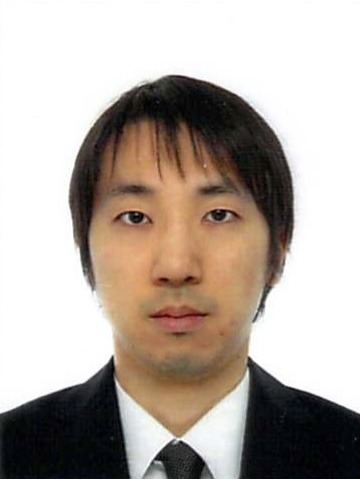
Associate Professor
I entered the School of Science and Engineering at Waseda University in 2000, studying applied chemistry, and in my fourth year I joined Satoshi Tsuneda’s laboratory. Under his guidance I began research as a student trainee with Dr. Naohiro Noda at the National Institute of Advanced Industrial Science and Technology (AIST). There I was given the chance to take on a problem that three members of the team, all of whom already held doctorates, had been working on for six months. I read the most recent papers closely and committed their figures and tables to memory, and the solution came to me one day on the way back from a walk in the park. It became the ABC-PCR method. That was the moment I decided to make my life in research. I completed my doctorate a year early, though the intensity of those years also put me in hospital with a duodenal ulcer.
After my doctorate I continued as a postdoctoral researcher at the University of Tokyo with Nobuyoshi Akimitsu, working on the basic biology of long noncoding RNAs in human cells. There I developed a new method, BRIC-seq, and succeeded in measuring how fast long noncoding RNAs are degraded. The work drew international attention; similar results appeared from other laboratories at around the same time, which confirmed that this was a genuine frontier.
I then moved to AIST as a Researcher and later a Senior Researcher, working on human iPS cells and long noncoding RNAs and finding new ways to assess the safety of chemical compounds. The COVID-19 pandemic became the occasion to add computational analysis to the wet-lab work I had done until then, which widened what I could ask. During those years at AIST I also supervised a student from Tokyo University of Pharmacy and Life Sciences, and out of that came the thought that supervising students is deeply worth doing — that I wanted my own laboratory at a university, and to teach.
Around the time I turned forty I noticed my way of working changing. I had once stood at the bench myself; increasingly I was looking at results produced by laboratory assistants and deciding what to do next. That made me think again about teaching — about passing on what I had learned, and contributing to the growth of the next generation of scientists.
In April 2023 I began again, as an Associate Professor in the School of Pharmacy at Yokohama University of Pharmacy. I work on long noncoding RNAs in mice and humans, combining molecular biology experiments with computational analysis to get at how living systems work. I think a research career and an interest in teaching complete each other. What I have learned in research makes the teaching richer, and talking with students widens my view as a researcher and starts new ideas.
I want to keep doing both, learning and growing alongside my students. As a university teacher I regard training the next generation of scientists as an important part of the job. If my knowledge and experience are of even a little use to my students’ futures, that will be a great pleasure.
Translated from the Japanese written by Hidenori Tani. The original is on the 日本語のページ.
Education and positions
Where the
work was done
Awards
6- 2018
Encouragement Award, The Japan Society for Analytical Chemistry
- 2015
Poster Encouragement Award, 1st E&E Forum
- 2014
Outstanding Poster Award, 21st E&E Forum
- 2010
Best Presentation Award, RNA Frontier Meeting 2010
- 2008
Mizuno Award
- 2005
Kenji Koga Prize (one of two recipients in Applied Chemistry, Waseda University)
University website